

Photo Courtesy: Times of India
Districts in Uttar Pradesh that share a border with the prohibition-enforced state of Bihar are experiencing an extraordinary surge in excise revenue, significantly outperforming expectations and leading the state in liquor sales. This unprecedented economic boom is directly attributed to Bihar's stringent prohibition policy, which has created a massive cross-border demand for alcohol. Several of these bordering districts have not only met but drastically exceeded their annual revenue targets, with some reporting figures over 100% of their projections, indicating a robust and consistent flow of liquor sales. The phenomenon clearly highlights a powerful economic dynamic driven by regulatory differences between the neighboring states.
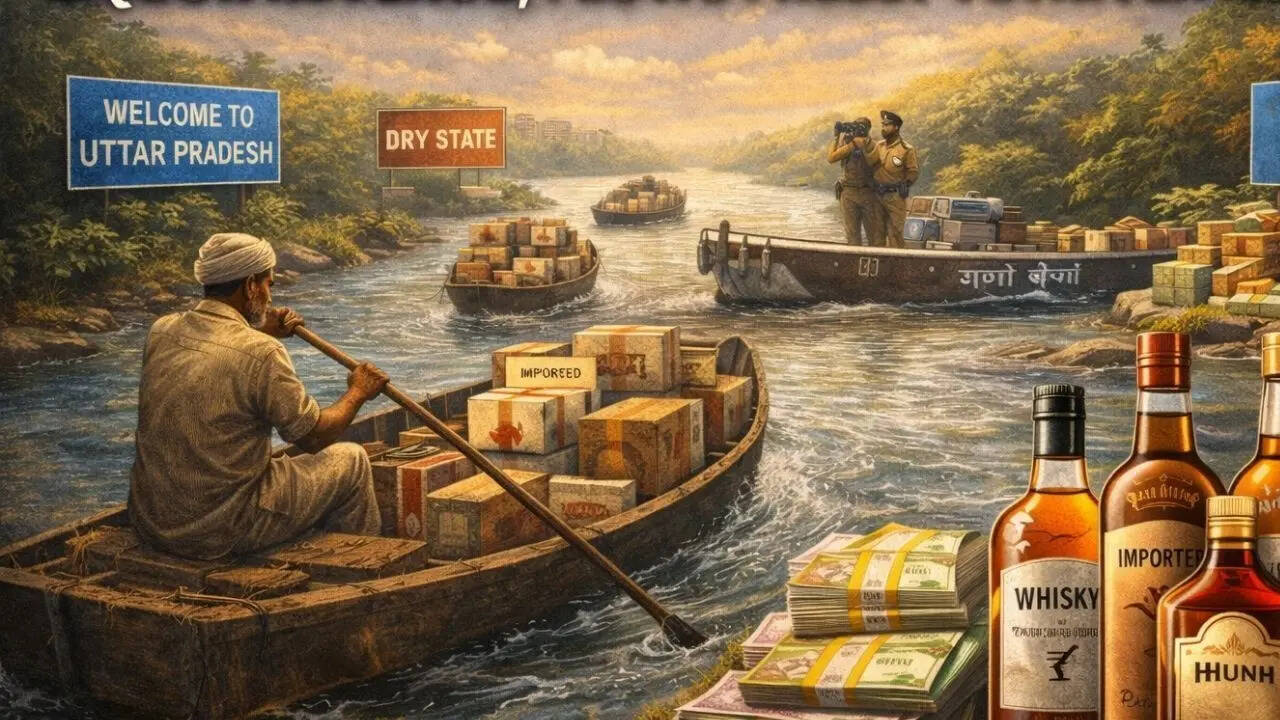
The increased revenue streams are primarily generated through two main avenues: direct purchases by individuals from Bihar who cross into Uttar Pradesh to buy alcohol for personal consumption, and large-scale bulk acquisitions intended for illicit smuggling back into the dry state. These clandestine operations frequently leverage the geographical proximity, with river routes reportedly becoming a significant conduit for the illegal transport of liquor. This sustained demand from Bihar has effectively transformed these bordering UP districts into lucrative hubs for the alcohol trade, injecting substantial funds into their local economies and boosting state coffers.
Intriguingly, many of the eastern Uttar Pradesh districts, traditionally considered less affluent, are now showcasing superior excise revenue performance compared to their more prosperous western counterparts within the state. This stark contrast underscores the profound impact of Bihar's prohibition, turning these border regions into unexpected economic powerhouses in the liquor sector. The persistent illicit flow of alcohol across state lines also brings to light the inherent challenges in enforcing complete prohibition and the creation of thriving black markets wherever such bans are implemented, prompting questions about policy efficacy.
Source: Timesofindia.indiatimes.com
The increased revenue streams are primarily generated through two main avenues: direct purchases by individuals from Bihar who cross into Uttar Pradesh to buy alcohol for personal consumption, and large-scale bulk acquisitions intended for illicit smuggling back into the dry state. These clandestine operations frequently leverage the geographical proximity, with river routes reportedly becoming a significant conduit for the illegal transport of liquor. This sustained demand from Bihar has effectively transformed these bordering UP districts into lucrative hubs for the alcohol trade, injecting substantial funds into their local economies and boosting state coffers.
Intriguingly, many of the eastern Uttar Pradesh districts, traditionally considered less affluent, are now showcasing superior excise revenue performance compared to their more prosperous western counterparts within the state. This stark contrast underscores the profound impact of Bihar's prohibition, turning these border regions into unexpected economic powerhouses in the liquor sector. The persistent illicit flow of alcohol across state lines also brings to light the inherent challenges in enforcing complete prohibition and the creation of thriving black markets wherever such bans are implemented, prompting questions about policy efficacy.
Source: Timesofindia.indiatimes.com
Original Story: Click Here (Times of India)


.png)


.jpg)


.png)


